01 c. 2900 BCE Before the modern bid
 c. 2900 BCE A Sumerian scribe records a field transaction
 Before the modern bid
A transaction becomes a durable record
- What carried the promise
- The British Museum describes the Blau Monuments as early Sumerian objects that appear to record the sale of a field and details of the transaction.
- What changed for the bidder
- Long before a modern tender, value, ownership and obligation already needed a medium that could outlast speech.
- The pressure introduced
- A boundary-bearing analogy: this is not presented as a modern procurement.
British Museum · The Blau Monuments ↗ Primary collection or institutional history. 02 c. 1900 BCE Before the modern bid
 c. 1900 BCE Old Assyrian merchants seal trade instructions
 Before the modern bid
Trade instructions cross distance
- What carried the promise
- Old Assyrian merchants used clay letters to record quantities, prices, exchange rates, routes and practical arrangements across long-distance trade.
- What changed for the bidder
- A commercial promise has always depended on information surviving distance, translation and changed conditions.
- The pressure introduced
- A boundary-bearing analogy: this is not presented as a modern procurement.
British Museum · Trade and contraband in ancient Assyria ↗ Primary collection or institutional history. 03 c. 1350 BCE Before the modern bid
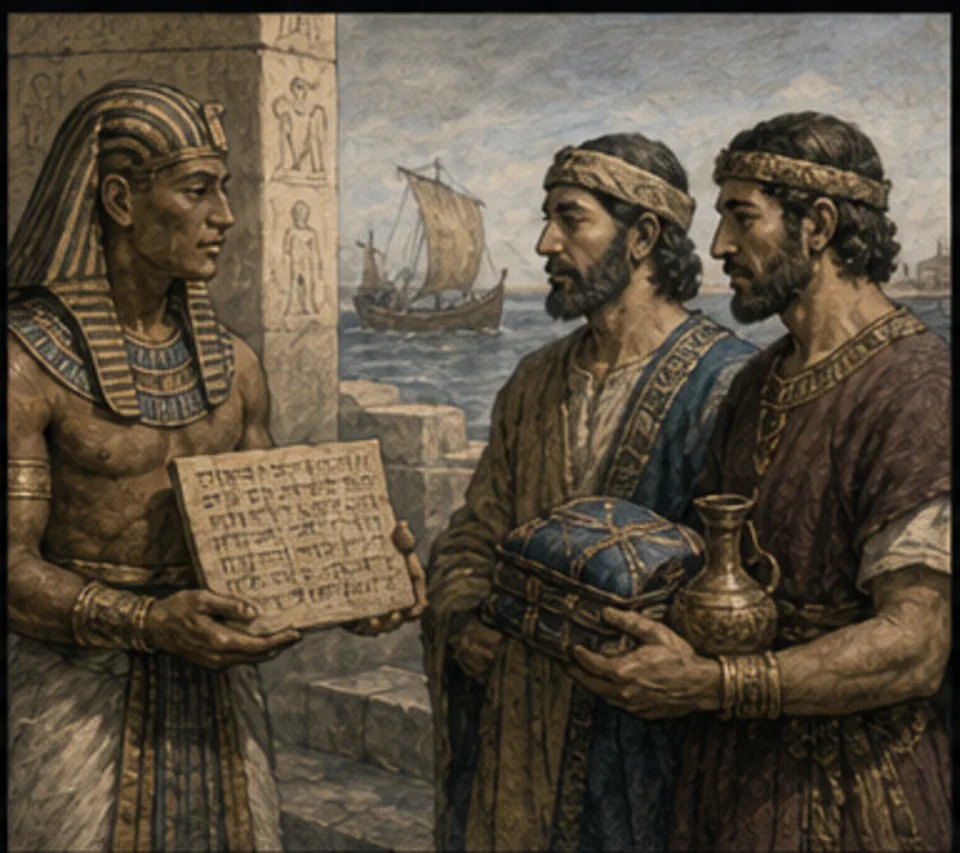 c. 1350 BCE Envoys carry a cuneiform diplomatic record
 Before the modern bid
Trade and tribute cross a diplomatic network
- What carried the promise
- The Amarna letters use clay, cuneiform and a shared diplomatic language to carry administration, gifts, trade and tribute between courts.
- What changed for the bidder
- A promise crossing institutions depends on a medium, a messenger and conventions both sides can interpret.
- The pressure introduced
- This is an analogy about durable inter-organisational communication—not a claim that royal diplomacy was procurement.
The Metropolitan Museum of Art · The Amarna Letters ↗ Museum collection essay linked to surviving objects. 04 c. 500 BCE Before the modern bid
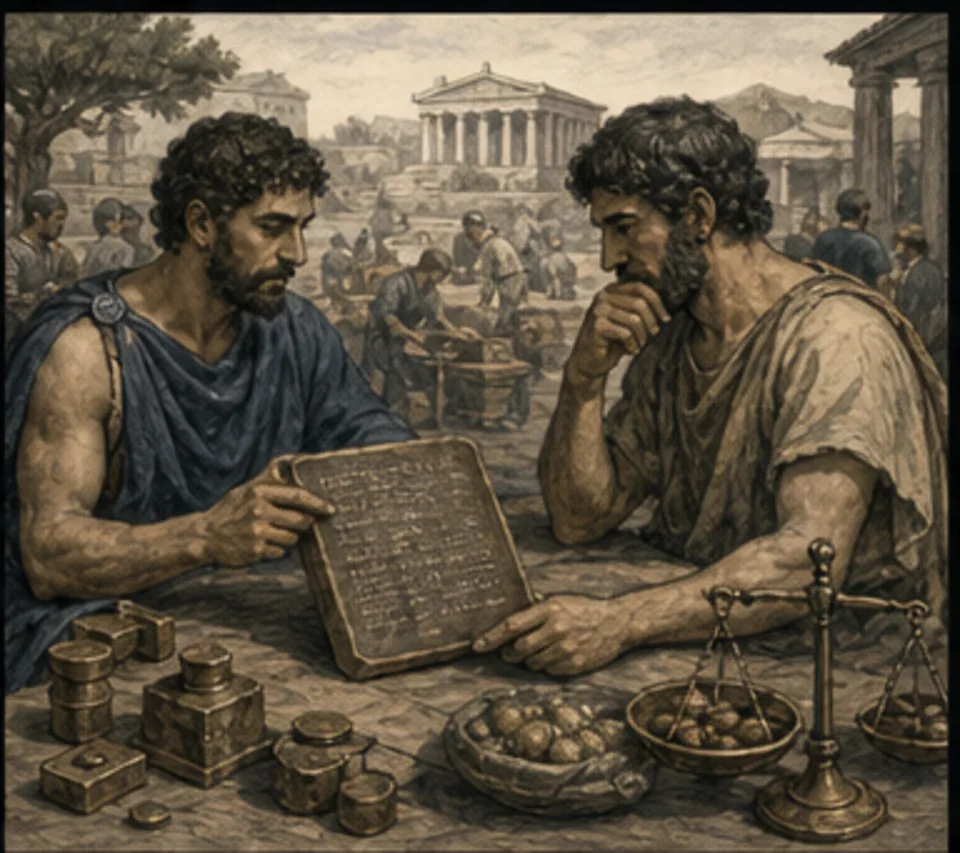 c. 500 BCE A treaty and weighed goods enter a durable record
 Before the modern bid
A shared obligation enters public metal
- What carried the promise
- A surviving bronze tablet records a hundred-year alliance in the Greek dialect of Elis.
- What changed for the bidder
- Publicly durable terms make memory less dependent on the people who first spoke them.
- The pressure introduced
- This treaty is used only as an analogy for persistent terms and witnessed commitment.
British Museum · Bronze treaty tablet ↗ Primary collection record. 05 1086—1089 The surveyed record
 1086—1089 A medieval scribe structures a land survey
 The surveyed record
Value, ownership and obligation become a structured public record
- What carried the promise
- Great Domesday compresses local returns into a large, organised parchment record of land, property, livestock and value.
- What changed for the bidder
- Large decisions begin to depend on consistent categories and a record that another official can inspect.
- The pressure introduced
- Domesday was a royal survey, not a tender; the link is the discipline of structured evidence.
The National Archives · Domesday ↗ UK public-record collection guide. 06 1275—1471 The customs account
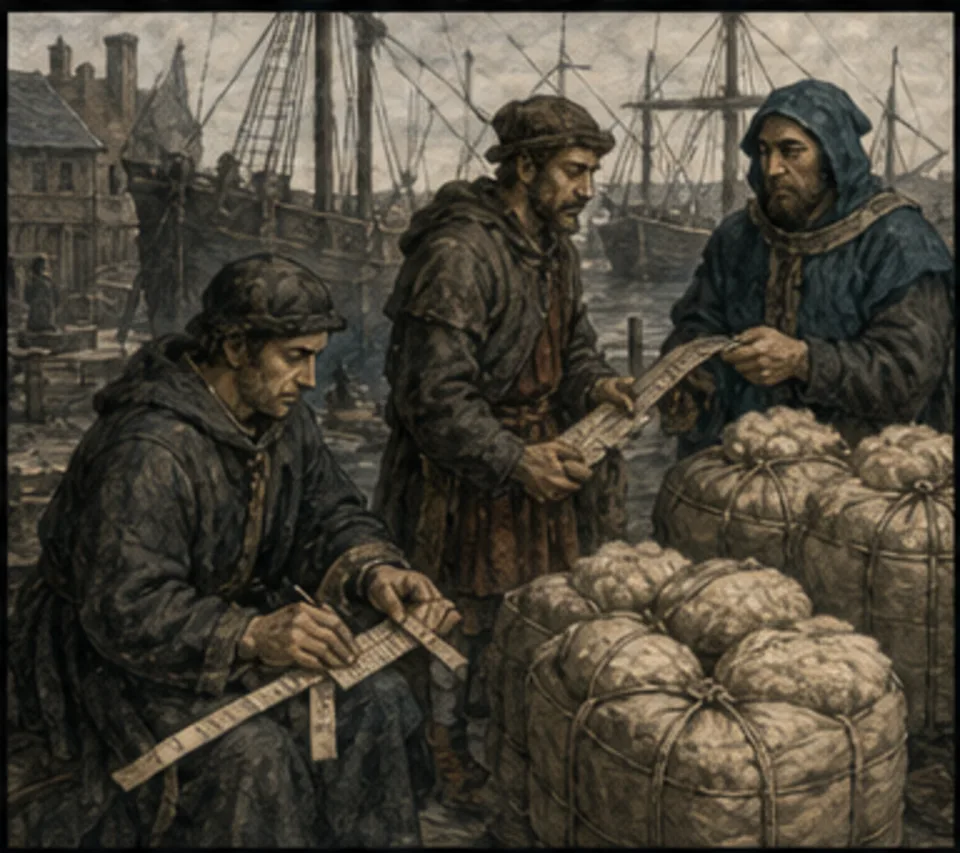 1275—1471 Customs officers examine cargo at a medieval port
 The customs account
Trade becomes a chain of declared, checked and audited particulars
- What carried the promise
- Medieval customs books recorded ships, masters, merchants, cargo, value and duty; collectors, controllers and surveyors created separate checks.
- What changed for the bidder
- The commercial claim becomes more credible when role, quantity, value and independent control can be reconciled.
- The pressure introduced
- Customs administration is not bidding; it reveals an early evidence-and-checking architecture around trade.
The National Archives · Medieval customs’ accounts ↗ Official guide to surviving Exchequer records. 07 1565—1799 The port book
 1565—1799 A port-book office reconciles manifests and goods
 The port book
The movement of goods acquires a multi-role evidence trail
- What carried the promise
- Port books record ships, merchants, goods and duties while collectors, controllers, searchers and surveyors hold different responsibilities.
- What changed for the bidder
- A single statement becomes less fragile when receipt, inspection and secondary checking leave separate records.
- The pressure introduced
- The archive also records gaps, fraud and false declarations: preserved data is evidence, not a complete market.
The National Archives · Merchant trade records ↗ Official guide to port books and their evidential limits. 08 1696 The comparative register
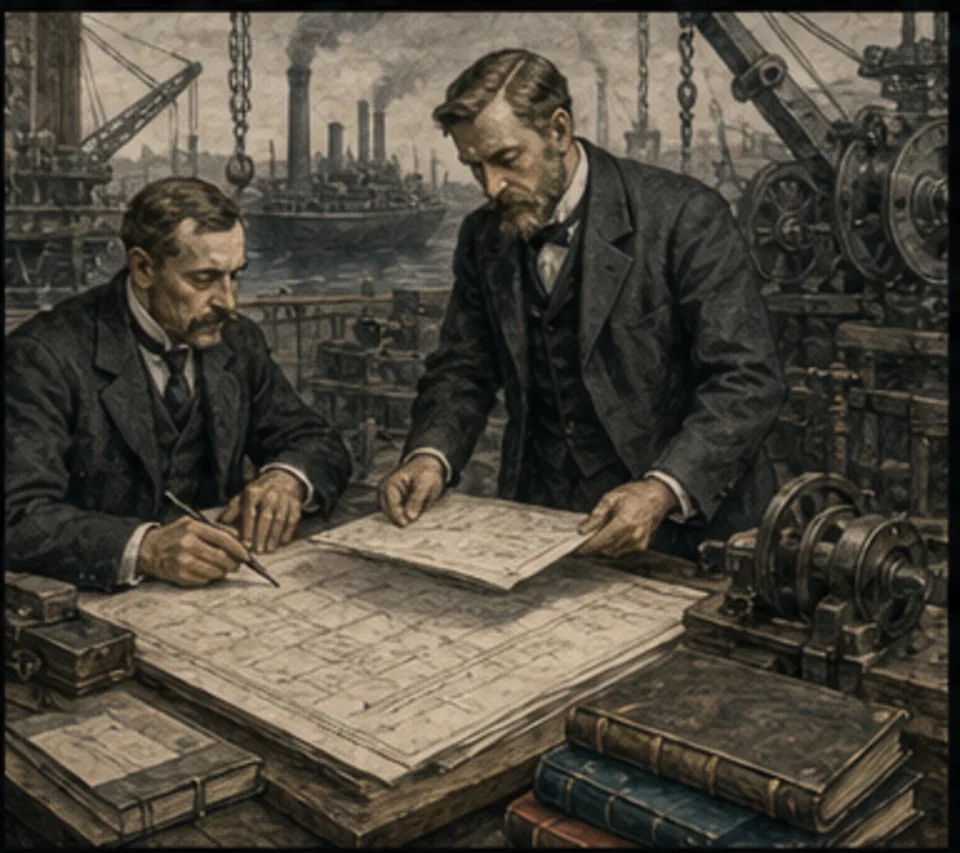 1696 Recurring trade registers make comparison possible
 The comparative register
Imports and exports enter recurring registers
- What carried the promise
- The Board of Customs introduced registers of imports and exports, extending the ability to compare commercial movement over time.
- What changed for the bidder
- Repeated structure turns an isolated transaction into a pattern that can inform judgement.
- The pressure introduced
- The register improves comparability without making incomplete or evasive reporting disappear.
The National Archives · Merchant trade records ↗ Official archival guide; section 6.2 identifies the 1696 registers. 09 1864—1921 The specialist purchase branch
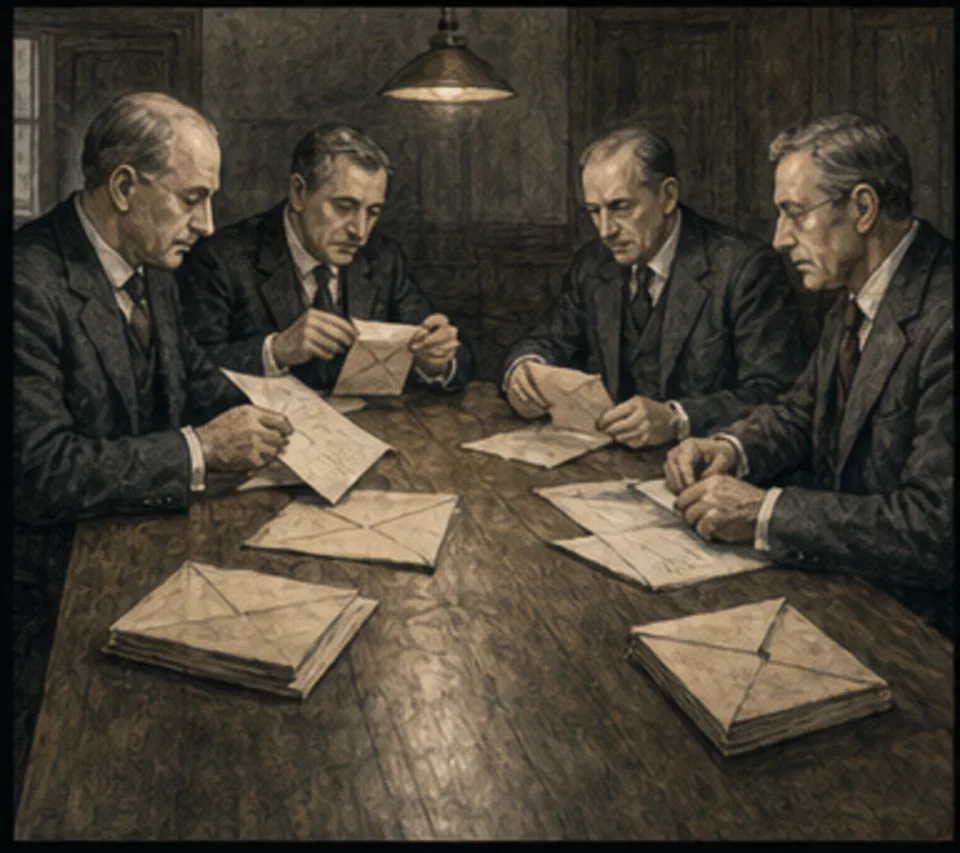 1864—1921 A specialist contract office compares plans and ledgers
 The specialist purchase branch
Contract and purchase become named administrative functions
- What carried the promise
- Royal Naval correspondence indexes identify a Registrar of Contracts and later Purchase Naval, Purchase Victualling, and Contract & Purchase branches.
- What changed for the bidder
- Commercial commitment is no longer only correspondence; named functions begin to own purchase and contract records.
- The pressure introduced
- Specialisation improves control while multiplying handovers and the need for a coherent record.
The National Archives · Royal Naval correspondence ↗ Official archival index guide; organisational labels are reported as catalogued. 10 1926 The sealed room
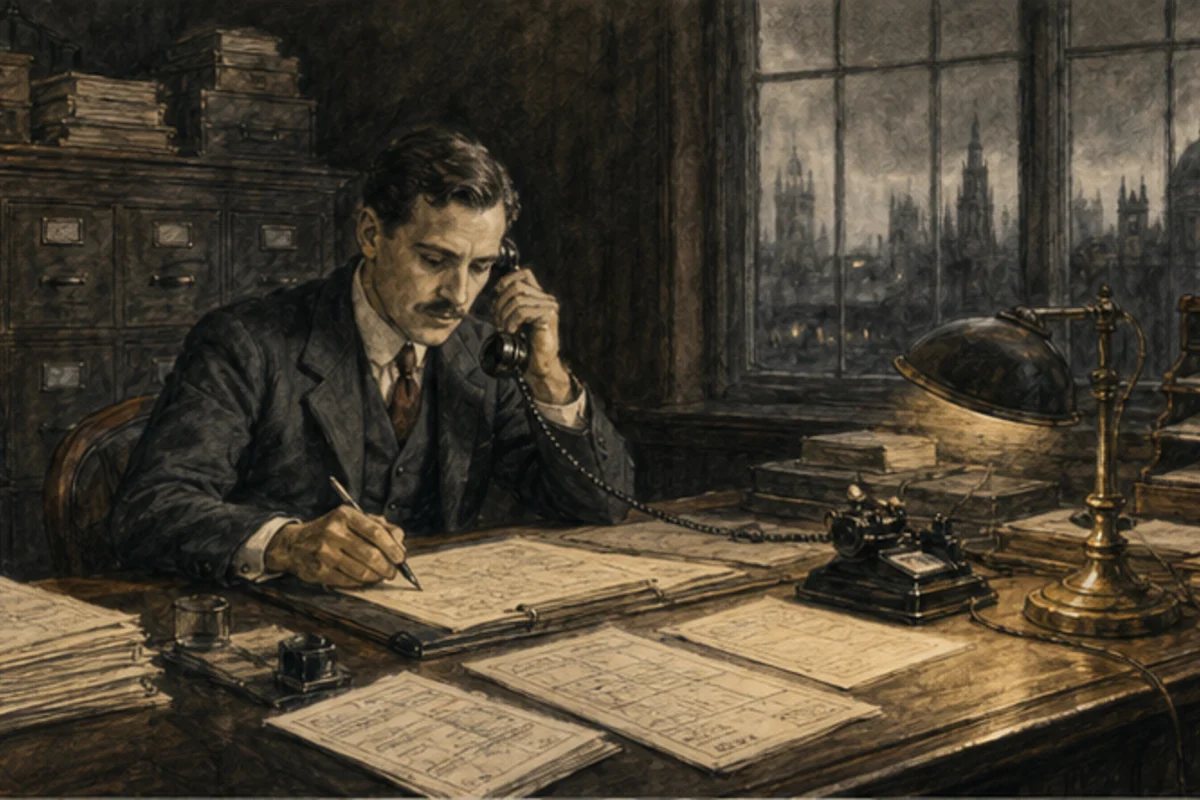 1926 Fountain pen, carbon copies and telephone govern the interwar contracts desk
 The sealed room
A deliberately interpretive starting portrait—not a claim that every 1926 procurement used one method.
- What carried the promise
- Typed schedules, technical drawings, priced bills, signatures and a physical envelope
- What changed for the bidder
- Accuracy had to survive paper, arithmetic, authorship and a one-way handover.
- The pressure introduced
- The bid existed as one scarce object. Copying, transport and receipt were part of the control system.
UK Parliament historic records ↗ Boundary source for contemporaneous public-administration records; this scene is an editorial synthesis. 11 1931 Specification becomes an institution
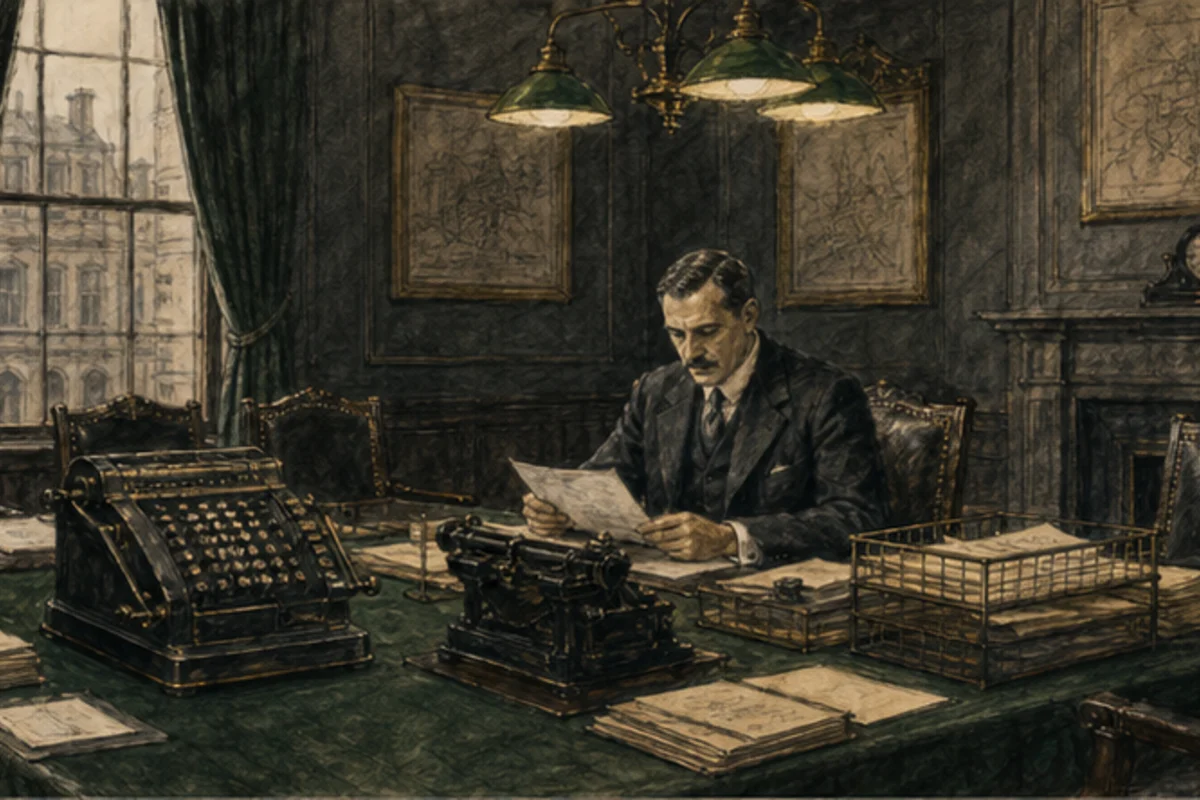 1931 Typewriter and mechanical calculation enter municipal comparison
 Specification becomes an institution
Standardisation makes the requirement more repeatable and the response more auditable.
- What carried the promise
- Standard forms, schedules of rates, drawings and formal correspondence
- What changed for the bidder
- A bidder must prove both price and exact reading of the buyer’s technical language.
- The pressure introduced
- A common form makes bids easier to compare but can hide differences in interpretation.
The National Archives · public records ↗ Catalogue route into retained departmental contract and works records. 12 1945 Reconstruction
 1945 Reconstruction promises are tested against drawings, material and arithmetic
 Reconstruction
The bid moves beyond price toward the credible organisation of resources.
- What carried the promise
- National programmes, technical schedules, capacity statements and coordinated supply records
- What changed for the bidder
- Capacity evidence and mobilisation logic become part of the offer, not an afterthought.
- The pressure introduced
- The promise must connect scarce inputs to delivery at scale.
The National Archives · post-war records ↗ Research-guide route into the administrative record; the process description remains a bounded synthesis. 13 1947 Trade rules—procurement outside the first frame
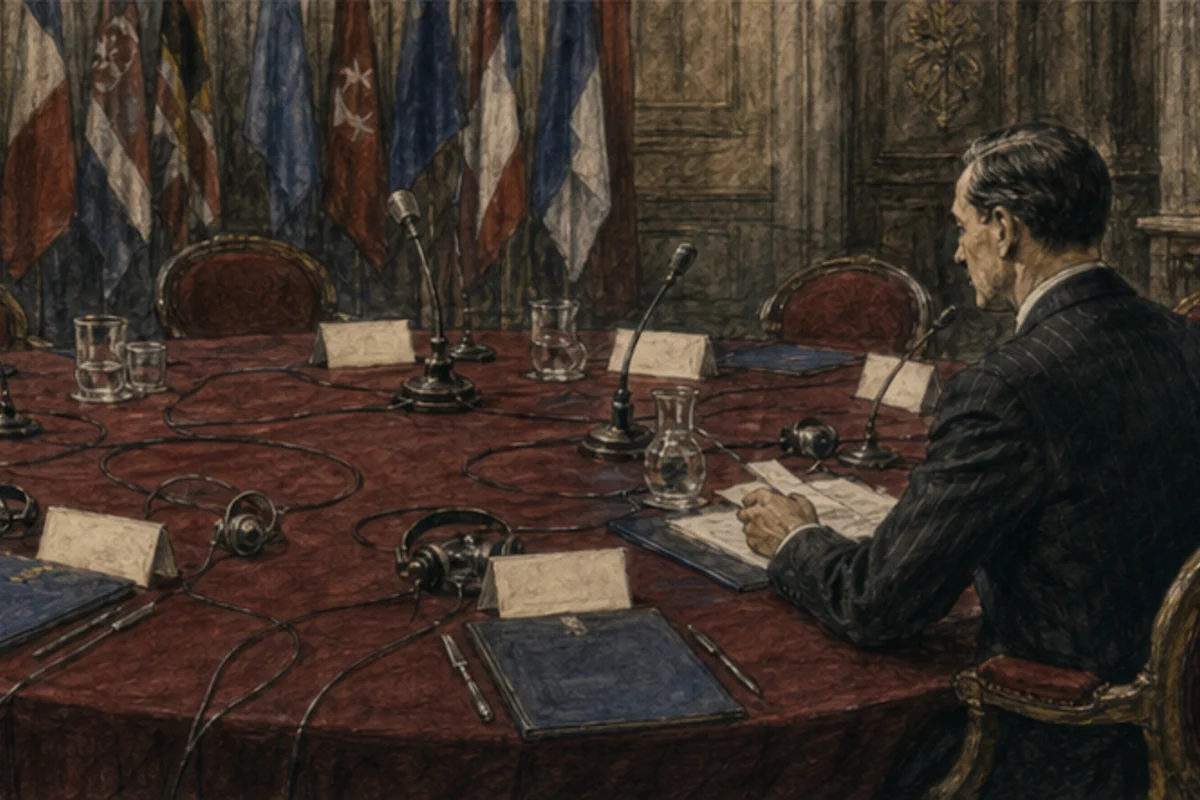 1947 Wired microphones and translation headsets carry a negotiated public commitment
 Trade rules—procurement outside the first frame
The absence itself matters: procurement later required its own negotiated disciplines.
- What carried the promise
- International agreements and national purchasing rules
- What changed for the bidder
- Access still depended heavily on national systems and disclosed coverage.
- The pressure introduced
- Government procurement was excluded from the early multilateral trading system.
World Trade Organization · GPA history ↗ WTO states that procurement was excluded during the first 30 years of the multilateral trading system. 14 1957 A common market begins to ask a procurement question
 1957 Blueprint racks and mechanical adding machines discipline public works
 A common market begins to ask a procurement question
Market-opening principles begin a long movement toward common procedural rules.
- What carried the promise
- Treaty principles, national notices and paper tender files
- What changed for the bidder
- Location alone becomes a less sufficient explanation of eligibility.
- The pressure introduced
- National practice meets a developing European legal order.
EUR-Lex · Treaty establishing the European Economic Community ↗ Treaty source; procurement-specific directives developed later. 15 1965 Programme age
 1965 Punch cards and tabulating equipment turn procedure into systems analysis
 Programme age
Network planning and systems thinking change how delivery confidence can be shown.
- What carried the promise
- Formal programmes, cost plans, method statements and management systems
- What changed for the bidder
- The response must connect tasks, resources, dependencies and dates.
- The pressure introduced
- Complex projects create dependencies no single price can explain.
NASA · history of project management ↗ Professional-learning route; dates of adoption varied by organisation and sector. 16 1976 Government purchasing enters trade negotiation
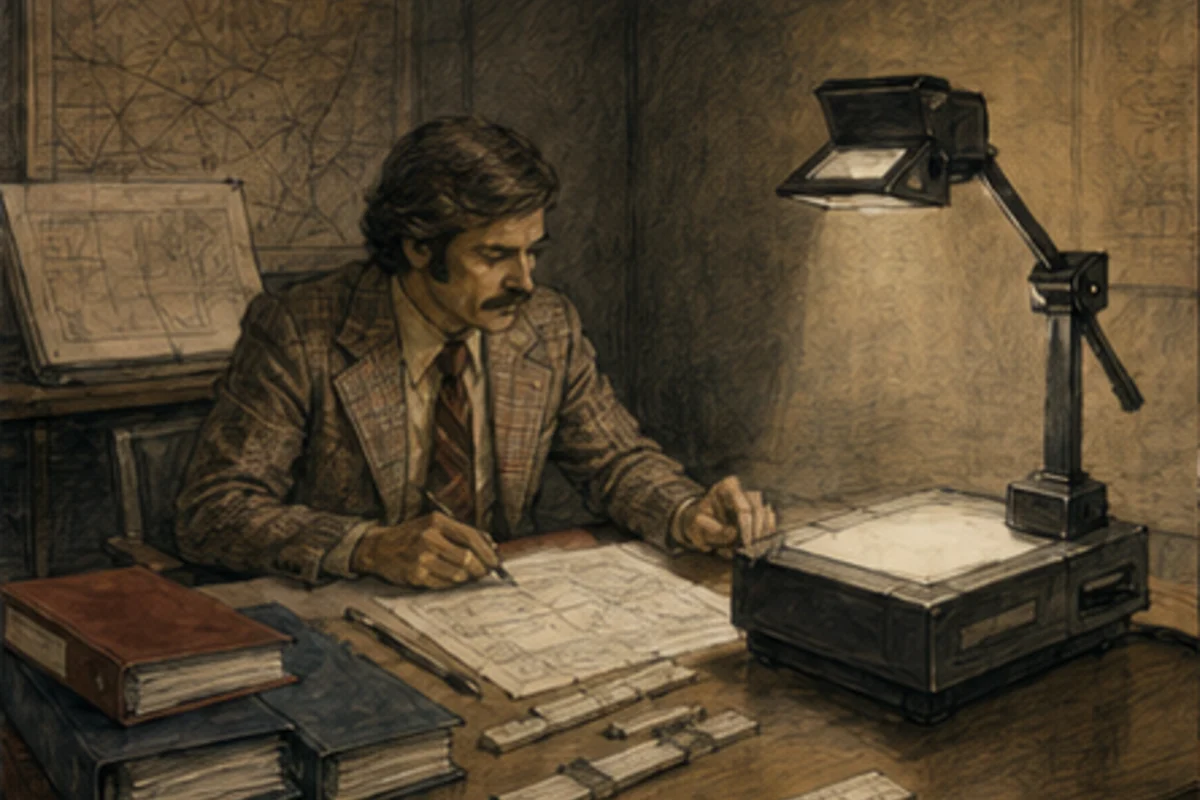 1976 Binders, projection and committee review shape a formal standard
 Government purchasing enters trade negotiation
GATT government-procurement negotiations begin during the Tokyo Round.
- What carried the promise
- Coverage schedules, negotiation texts and formal notices
- What changed for the bidder
- A supplier must understand entity, goods/services and threshold coverage—not only the opportunity text.
- The pressure introduced
- Transparency and market access must be negotiated across different national systems.
World Trade Organization · evolution of the GPA ↗ Official WTO chronology. 17 1979 The first multilateral procurement code
 1979 Translation booths, microphones and schedules frame multilateral negotiation
 The first multilateral procurement code
The Tokyo Round Agreement on Government Procurement is adopted.
- What carried the promise
- A negotiated code, coverage schedules and national implementing measures
- What changed for the bidder
- International public opportunities begin to sit inside a dedicated rules framework.
- The pressure introduced
- Comparable rules must operate across jurisdictions without erasing national systems.
World Trade Organization · GPA 2012 at ten ↗ Official WTO chronology records adoption in 1979. 18 1979—2014 Multilateral procurement discipline
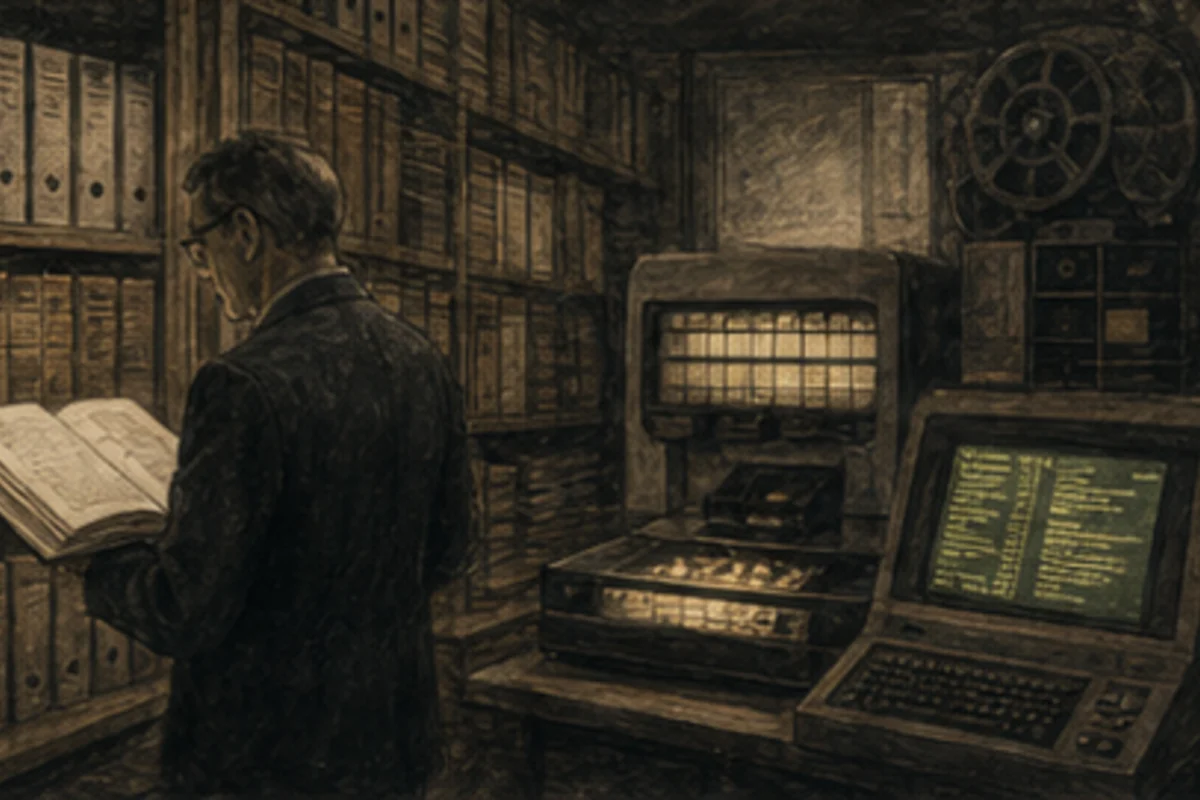 1979—2014 Paper treaty shelves pass through microfiche into a searchable database
 Multilateral procurement discipline
Public purchasing enters a multilateral discipline
- What carried the promise
- The GPA develops from the 1979 Tokyo Round code through the 1994 agreement to the revised agreement entering into force in 2014.
- What changed for the bidder
- Access is never simply global or local; it is defined by coverage, threshold, entity and procedure.
- The pressure introduced
- Coverage is conditional: agreement, threshold, entity, service and procedure still determine whether access exists.
World Trade Organization · GPA evolution ↗ Primary collection or institutional history. 19 1981 The code takes effect
 1981 A green-screen terminal and dot-matrix record enter the purchasing office
 The code takes effect
The 1979 GPA enters into force for its initial parties.
- What carried the promise
- National regulations implementing multilateral commitments
- What changed for the bidder
- Procedure can be questioned against an external agreement rather than custom alone.
- The pressure introduced
- International commitments have to become operational purchasing practice.
World Trade Organization · GPA history ↗ Official WTO history. 20 1984 A federal rulebook consolidates
 1984 Floppy disks, fax and a beige CRT accelerate administrative exchange
 A federal rulebook consolidates
The US FAR becomes effective on 1 April 1984.
- What carried the promise
- The Federal Acquisition Regulation and agency supplements
- What changed for the bidder
- Clause reading, representations and documented compliance become inseparable from solution design.
- The pressure introduced
- Uniformity must coexist with complex agency missions.
Acquisition.gov · FAR foreword ↗ Official current FAR publication with the commencement date. 21 1985 Competitive contracting
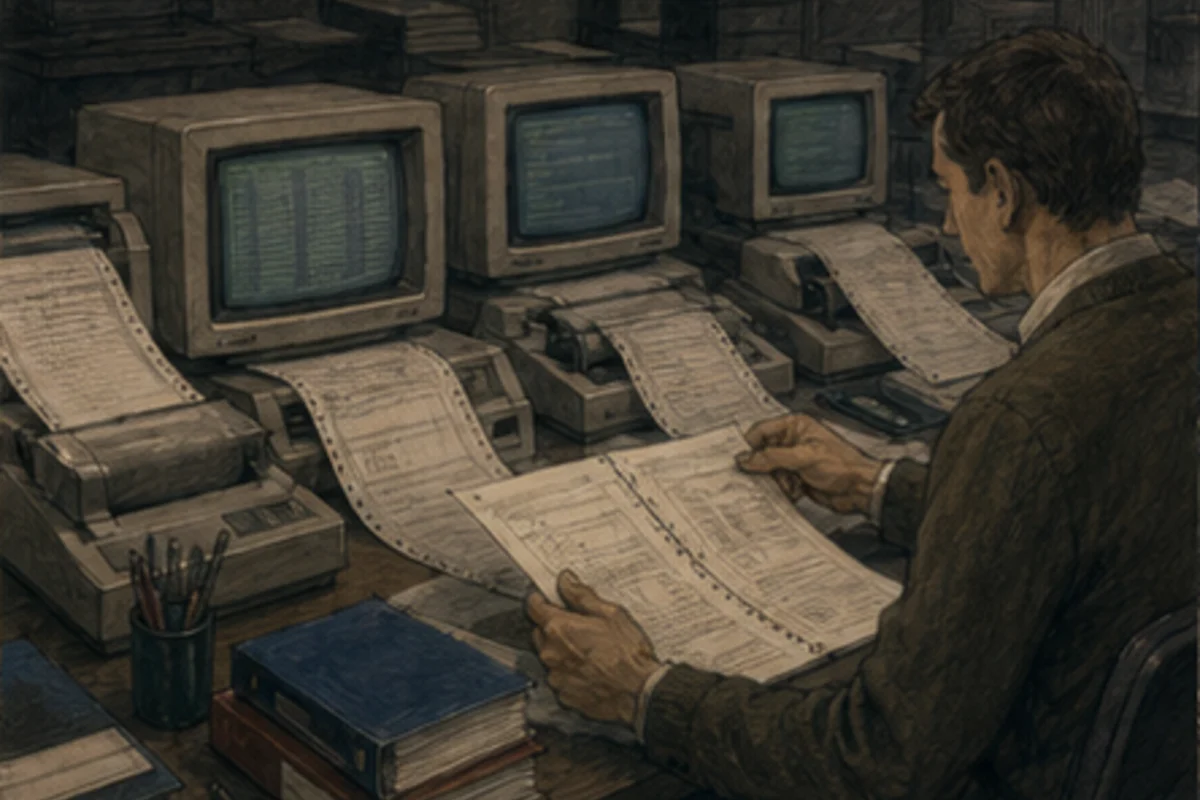 1985 Multiple terminals and tractor-feed paper support document comparison
 Competitive contracting
Outsourced service models increase the need to describe transition and operating control.
- What carried the promise
- Large printed responses, pre-qualification, tender boards and formal transfers
- What changed for the bidder
- A winning document must also be a plausible future service.
- The pressure introduced
- Price pressure grows while the service promise becomes broader.
UK Parliament · public administration record ↗ Contemporaneous record route; organisational adoption was uneven. 22 1993 A model law for reform
 1993 A modem, laser printer and early graphical desktop connect the procurement office
 A model law for reform
UNCITRAL adopts its Model Law on Procurement of Goods and Construction on 16 July.
- What carried the promise
- Model provisions and national implementing legislation
- What changed for the bidder
- Procedural stages and remedies become more legible across reforming systems.
- The pressure introduced
- States need adaptable rules without losing core safeguards.
UNCITRAL · 1993 Model Law ↗ Official UN record. 23 1994 Coverage widens
 1994 Faxed schedules and an early desktop carry treaty coverage into practice
 Coverage widens
GPA 1994 is signed in Marrakesh alongside the WTO agreement.
- What carried the promise
- A revised international agreement, annexes and entity schedules
- What changed for the bidder
- International access expands but remains schedule-specific.
- The pressure introduced
- Broader coverage makes access more useful and the rules more consequential.
World Trade Organization · GPA history ↗ Official WTO history. 24 1996 The revised agreement operates
 1996 Bound directives meet electronic drafting on a legal-policy workstation
 The revised agreement operates
GPA 1994 enters into force on 1 January 1996.
- What carried the promise
- Notices, challenge procedures and revised coverage commitments
- What changed for the bidder
- Market access and challenge rights become part of pursuit qualification.
- The pressure introduced
- A larger governed market creates more opportunity and more procedural scrutiny.
World Trade Organization · GPA history ↗ Official WTO chronology. 25 2004 Electronic procedure receives a legal frame
 2004 A web portal, scanner and CD archive move the notice online
 Electronic procedure receives a legal frame
EU Directives 2004/17/EC and 2004/18/EC establish a coherent framework for electronic procurement.
- What carried the promise
- Portals, electronic catalogues, dynamic purchasing systems and e-auctions
- What changed for the bidder
- File formats, authentication, catalogue structure and submission mechanics become bid controls.
- The pressure introduced
- Digitisation can lower transaction cost but can also fragment access.
EUR-Lex · e-procurement action plan ↗ European Commission action plan describing the 2004 legal framework. 26 2007 Interoperability becomes process design
 2007 Laptop search and printed notices bridge paper and cross-border discovery
 Interoperability becomes process design
The CEN Business Interoperability Interfaces workshop begins harmonising pan-European e-procurement messages.
- What carried the promise
- Structured business messages and reusable electronic profiles
- What changed for the bidder
- Structured evidence and reusable business information reduce repeated manual translation.
- The pressure introduced
- A digital form is not interoperable merely because it is online.
TED Developer Documentation · CEN BII ↗ Official EU Publications Office technical history. 27 2010 Contracts become public records
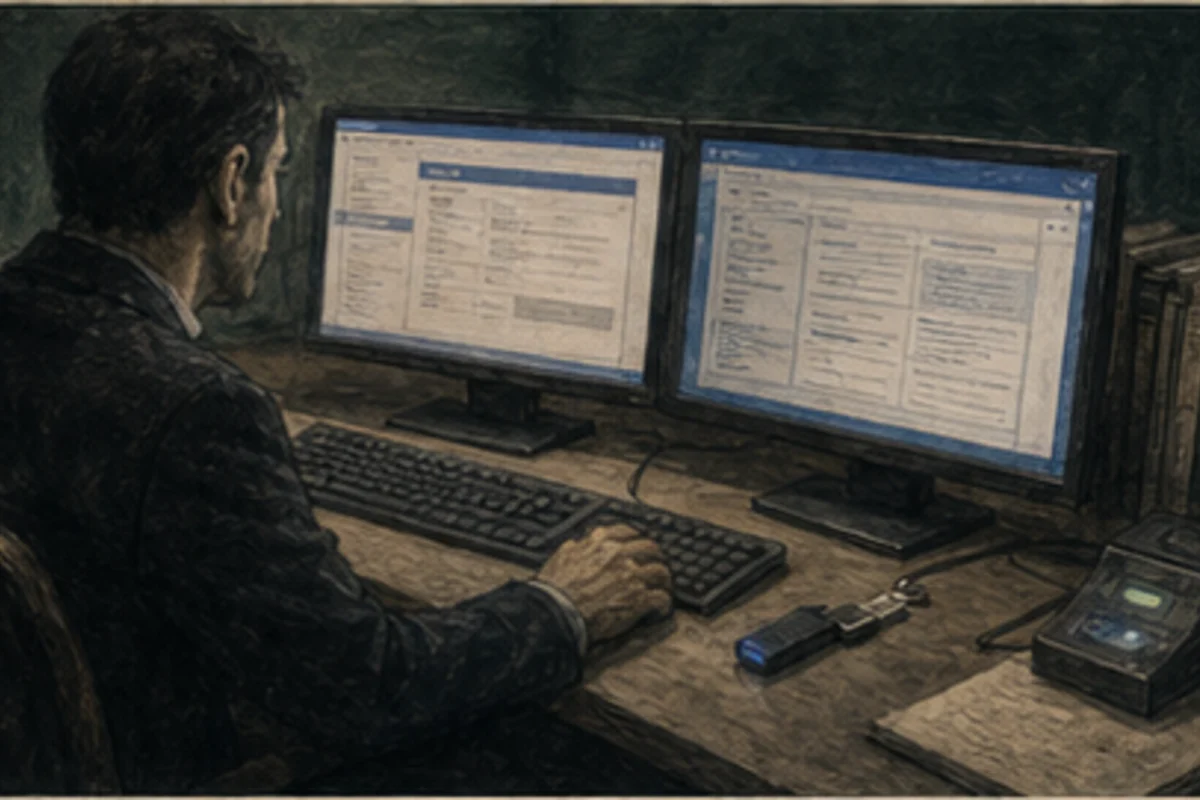 2010 Dual screens, secure tokens and removable media govern electronic submission
 Contracts become public records
UK central-government tender and contract publication commitments are announced.
- What carried the promise
- A single online publication service, downloadable documents and searchable notices
- What changed for the bidder
- Pipeline observation and incumbent analysis become available to smaller suppliers.
- The pressure introduced
- Publication creates scrutiny of both access and award.
GOV.UK · government buying policy 2010–2015 ↗ Official account of the publication commitments and Contracts Finder. 28 2012 Value extends beyond the immediate purchase
 2012 Laptops and a projected lifecycle map make open contracting collaborative
 Value extends beyond the immediate purchase
The Public Services (Social Value) Act 2012 establishes a wider pre-procurement consideration for covered services.
- What carried the promise
- Commissioning strategies, outcome measures and social-value commitments
- What changed for the bidder
- Outcome evidence and local delivery mechanisms move closer to core solution design.
- The pressure introduced
- A claim must be relevant, proportionate and deliverable—not a detached promise.
GOV.UK · Social Value Act resources ↗ Official implementation overview; the Act came into force on 31 January 2013. 29 2014 Procedure and data both become more structured
 2014 Tablet annotation and structured records accompany procurement reform
 Procedure and data both become more structured
EU procurement directives are adopted while OCDS moves through beta and release-candidate stages.
- What carried the promise
- New EU directives, early open-contracting schemas and digital records
- What changed for the bidder
- Qualification, evidence and lifecycle records become more reusable and comparable.
- The pressure introduced
- Documents designed for humans begin to acquire machine-readable counterparts.
Open Contracting Data Standard · development history ↗ Canonical OCDS documentation. 30 2014—2026 Open contracting data
 2014—2026 Linked lifecycle records become an open evidence observatory
 Open contracting data
The contract becomes analysable data
- What carried the promise
- OCDS moved from beta in 2014 to a 1.0 release in 2015, while EU eProcurement ontology modules now model an increasingly complete lifecycle.
- What changed for the bidder
- The document has not disappeared; it now sits beside a structured trail that can be compared, linked and audited.
- The pressure introduced
- Comparable data increases scrutiny; provenance, field completeness and linkage quality become part of the judgement.
OCDS · development history ↗ Primary collection or institutional history. 31 2015 Portal, principles and whole-cycle governance
 2015 Linked data blocks and a network graph make contract records comparable
 Portal, principles and whole-cycle governance
The UK Public Contracts Regulations take effect; OCDS 1.0 and the OECD Recommendation arrive in the same year.
- What carried the promise
- Contracts Finder, electronic communications, structured guidance and lifecycle controls
- What changed for the bidder
- The bid becomes an evidence-governed process connected to contract management and learning.
- The pressure introduced
- More visible opportunities increase both access and the need to qualify consistently.
GOV.UK · Public procurement policy ↗ Official UK policy account; compare with OCDS and OECD sources linked in the page. 32 2016 Self-declaration replaces repeated certificates
 2016 Ultrabooks, e-forms and digital signatures support shared procedure
 Self-declaration replaces repeated certificates
The ESPD operationalises a reusable electronic self-declaration route under Directive 2014/24/EU.
- What carried the promise
- The European Single Procurement Document and structured eligibility evidence
- What changed for the bidder
- Evidence provenance and the ability to produce supporting documents remain essential.
- The pressure introduced
- Administrative burden must fall without weakening the evidence boundary.
TED Developer Documentation · ESPD ↗ Official EU Publications Office documentation. 33 2018 Electronic communication becomes the norm
 2018 A slim secure workstation brings signing and evaluation into one environment
 Electronic communication becomes the norm
Later electronic-communication provisions of the UK 2015 Regulations take effect.
- What carried the promise
- End-to-end portals, controlled documents, digital clarification and audit logs
- What changed for the bidder
- Upload rehearsals, manifests, checksums and receipts become executive controls.
- The pressure introduced
- A portal failure or wrong file can erase otherwise strong work.
Legislation.gov.uk · Public Contracts Regulations 2015 ↗ Official legislation and commencement provisions. 34 2020 Resilience and remote rooms
 2020 A dispersed bid team assembles one promise through remote workstations
 Resilience and remote rooms
The Construction Playbook and Transforming Public Procurement Green Paper appear during a year of operational disruption.
- What carried the promise
- Remote bid rooms, rapid clarifications, continuity models and new playbooks
- What changed for the bidder
- Resilience stops being a generic claim and becomes a designed operating response.
- The pressure introduced
- The bid must survive uncertainty while remaining deliverable.
GOV.UK · Construction Playbook launch ↗ Official Cabinet Office publication. 35 2021 A reformed architecture is challenged in public
 2021 Cloud modelling and touch controls connect commercial choices to delivery
 A reformed architecture is challenged in public
Government publishes its response after a consultation involving more than 600 submissions.
- What carried the promise
- Consultation responses, draft principles and a developing central digital platform
- What changed for the bidder
- Future readiness includes watching policy formation, not only active notices.
- The pressure introduced
- A reform must work for different buyers and supplier sizes.
GOV.UK · Transforming Public Procurement response ↗ Official consultation outcome. 36 2022 Lifecycle transparency is designed
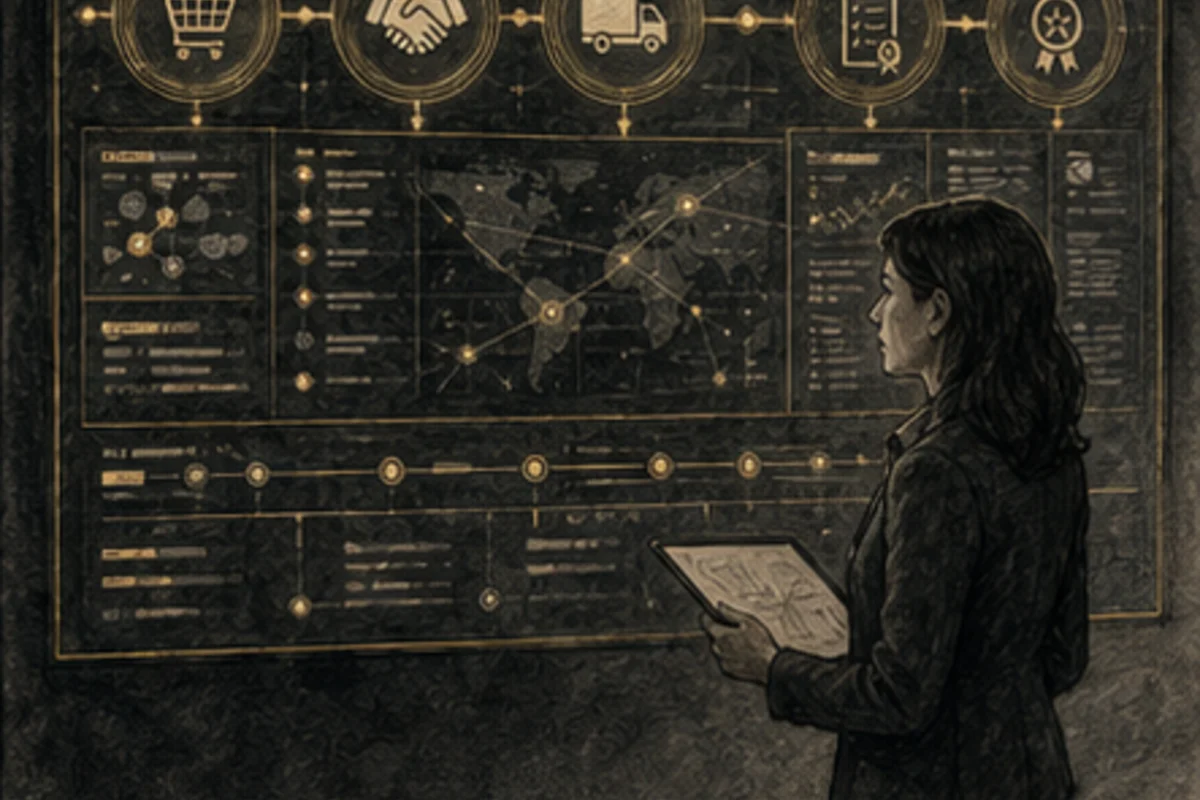 2022 A lifecycle wall joins award, performance and change records
 Lifecycle transparency is designed
The UK publishes its transparency ambition for the new regime.
- What carried the promise
- Common identifiers, expanded notice types and a proposed central data platform
- What changed for the bidder
- Pipeline, award, modification and performance records can become connected intelligence.
- The pressure introduced
- Transparency must be usable, not a larger pile of disconnected documents.
GOV.UK · procurement transparency ambition ↗ Official Cabinet Office policy paper. 37 2023 A new UK statute
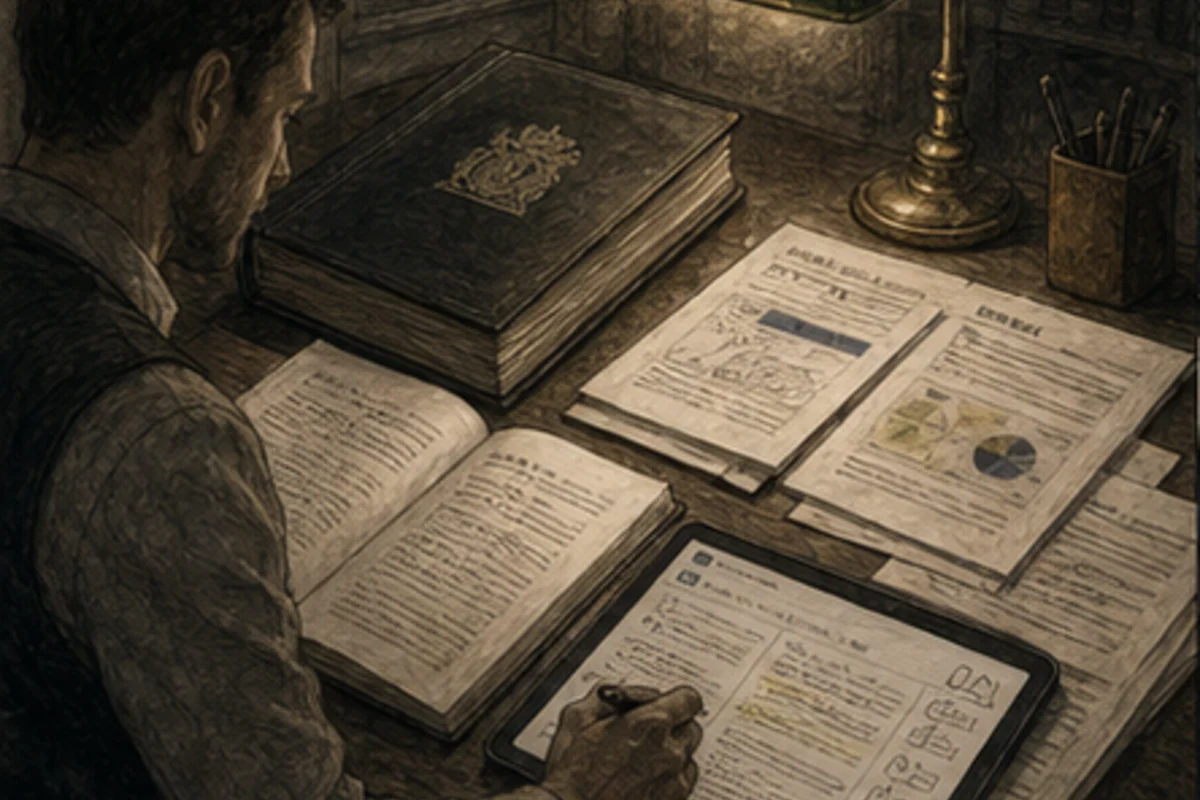 2023 Statute, consultation and digital annotation meet at the reform desk
 A new UK statute
The Procurement Act 2023 receives Royal Assent.
- What carried the promise
- A single Act, regulations to follow, guidance and a central digital platform
- What changed for the bidder
- Qualification, procedure, assessment and post-award visibility require an updated evidence architecture.
- The pressure introduced
- New language must be translated into live controls without losing transitional obligations.
Legislation.gov.uk · Procurement Act 2023 ↗ Official enacted text. 38 2024 The operational details arrive
 2024 Human review sits inside an AI-assisted evidence and traceability studio
 The operational details arrive
The Procurement Regulations 2024 and commencement instruments set the operating framework.
- What carried the promise
- Regulations, notice schemas, guidance, learning modules and transition plans
- What changed for the bidder
- Templates, registers, role instructions and portal routines must be tested before a live pursuit.
- The pressure introduced
- Implementation detail determines whether policy becomes repeatable practice.
Legislation.gov.uk · Procurement Regulations 2024 ↗ Official legislation. 39 2025 The new regime begins
 2025 Portable devices navigate an interoperable constellation of public records
 The new regime begins
The Procurement Act 2023 regime commences on 24 February 2025 for new covered procurements.
- What carried the promise
- Find a Tender lifecycle notices, flexible procedures and updated guidance
- What changed for the bidder
- Old and new regimes coexist; the bidder must identify the governing route before acting.
- The pressure introduced
- More flexibility increases the need to understand the exact published design.
Find a Tender · legislation and service status ↗ Official service statement and legislation links. 40 2026 Structured orchestration
 2026 A human decision gate remains visible inside a spatial evidence field
 Structured orchestration
Public procurement increasingly exposes a machine-readable lifecycle while professional judgement remains humanly accountable.
- What carried the promise
- OCDS releases, evidence objects, assisted drafting, review traces and permanent editions
- What changed for the bidder
- The competitive asset is not generated prose; it is a governed system that turns changing evidence into deliverable decisions.
- The pressure introduced
- Speed increases; confidentiality, provenance and responsibility cannot be delegated.
TED · eProcurement Ontology history ↗ Official EU Publications Office history of the expanding end-to-end ontology.